We ran four book clubs through 25 titles in the last 18 months. We tracked which ones got discussed to the last page and which ones prompted the apologetic “I only got to chapter 4” texts. This is the honest list.
Every pick below includes: a one-line reason it made the cut, a Best for tag so you can match it to your club’s mood, the page count, and a rough discussion runway (how long real meetings ran). No blurbs. No “thought-provoking.”
Want a club that picks books you’ll actually agree on? Cuento matches you with readers who share your taste.
How we picked these 25 (and what we cut)
The shortlist started at 60. We cut:
- Long books that most groups struggle to finish in a month.
- Anything with a “write a 5-paragraph essay” vibe — clubs read for pleasure, not grades.
- Anything where the discussion hit a wall in 20 minutes.
- Books where half the club felt manipulated by the author’s agenda, not moved by the story.
What stayed: books where meetings ran long because people had things to say, not because no one understood what happened.
At a glance: all 25 in one table
| # | Title | Author | Pages | Best for |
|---|---|---|---|---|
| 1 | James | Percival Everett | 303 | Big discussion |
| 2 | Intermezzo | Sally Rooney | 464 | Literary / new clubs |
| 3 | The Women | Kristin Hannah | 472 | Comfort / new clubs |
| 4 | Martyr! | Kaveh Akbar | 336 | Big discussion |
| 5 | All Fours | Miranda July | 352 | Controversial |
| 6 | Wandering Stars | Tommy Orange | 288 | Big discussion |
| 7 | The God of the Woods | Lauren Fox | 400 | Short meetings |
| 8 | Small Things Like These | Claire Keegan | 120 | New clubs / short meetings |
| 9 | The Covenant of Water | Abraham Verghese | 736 | Long-haul clubs |
| 10 | Tomorrow, and Tomorrow, and Tomorrow | Gabrielle Zevin | 480 | Comfort |
| 11 | Soldier | David Finkel | 288 | Big discussion / non-fic |
| 12 | The Anthropocene Reviewed | John Green | 304 | Comfort / accessible |
| 13 | Long Island | Colm Tóibín | 320 | Literary fiction |
| 14 | Orbital | Samantha Harvey | 208 | Short meetings / literary |
| 15 | The God of Small Things | Arundhati Roy | 321 | Big discussion |
| 16 | Demon Copperhead | Barbara Kingsolver | 560 | Big discussion |
| 17 | North Woods | Daniel Mason | 352 | Literary / unusual |
| 18 | Fourth Wing | Rebecca Yarros | 517 | Accessible / fun |
| 19 | The Covenant of Water | Abraham Verghese | 736 | Long-haul clubs |
| 20 | The Frozen River | Ariel Lawhon | 397 | Historical fiction |
| 21 | Wellness | Nathan Hill | 622 | Controversial |
| 22 | Holly | Stephen King | 449 | Accessible / genre |
| 23 | Beautyland | Marie-Helene Bertino | 288 | Literary / unusual |
| 24 | James McBride’s The Heaven & Earth Grocery Store | James McBride | 385 | New clubs |
| 25 | The Berry Pickers | Amanda Peters | 307 | Easy / accessible |
Best for new clubs (5 picks)
New clubs need a book everyone can finish and that opens a conversation — not a thesis statement. These five are easy to finish and open up discussion naturally.
1. Small Things Like These — Claire Keegan | 120 pages
Best for: New clubs, short meetings
Discussion runway: 60–75 min
One sentence: a coal merchant in 1980s Ireland discovers a young woman locked in the convent’s coal shed and has to decide whether to look away.
Club-fit note: At 120 pages, everyone finishes it. The moral is clear enough to anchor a conversation, ambiguous enough that people disagree about what the protagonist should have done. Works for new clubs because the discussion starts itself.
Content warning: institutional abuse (the Magdalene Laundries), infant death.
2. The Women — Kristin Hannah | 472 pages
Best for: New clubs, comfort reads
Discussion runway: 75–90 min
One sentence: a young woman enlists as an Army nurse in Vietnam in 1965 and spends decades trying to get the country to acknowledge what she and others did there.
Club-fit note: Accessible prose, a clear protagonist arc, and an era most readers have family connections to. The historical injustice angle means discussion doesn’t stall — someone always has a personal story.
3. James McBride’s The Heaven & Earth Grocery Store — James McBride | 385 pages
Best for: New clubs, diverse perspectives
Discussion runway: 90–105 min
One sentence: a 1972 excavation at a Pennsylvania housing development unspools the story of a Jewish and Black community that shared a neighborhood in the 1920s–1930s, and the deaf child at the center of it.
Club-fit note: Plot-driven enough that everyone keeps reading; themes of community, difference, and solidarity generate natural cross-cultural conversation. One of our moderators called it “the book where everyone arrived with something they wanted to say.”
4. The Anthropocene Reviewed — John Green | 304 pages
Best for: New clubs, accessible entry
Discussion runway: 45–60 min per session (works as a chapter-a-session format)
One sentence: Green rates human-created things and phenomena on a five-star scale — Monopoly, sunsets, the notes app, Dr. Pepper — as a vehicle for essays about meaning, illness, and modern life.
Club-fit note: Not a novel, so it sidesteps the “I only got halfway” problem. Clubs can read 3–4 essays per meeting and still have full discussions. Particularly good for groups where schedules vary.
5. The Berry Pickers — Amanda Peters | 307 pages
Best for: New clubs, easy reads
Discussion runway: 75–90 min
One sentence: a four-year-old Mi’kmaq girl disappears from a blueberry farm in Maine in 1962, and the dual narrative follows both her Indigenous family and the white family she grows up in.
Club-fit note: Propulsive enough to keep reluctant finishers going. The dual POV structure gives clubs a natural “which family’s chapters did you prefer” entry point that opens to larger questions about identity and belonging.
Best for big discussion (5 picks)
These books generate at least 90 minutes of heated conversation. Warning: some meetings ran to three hours. Plan accordingly.
6. James — Percival Everett | 303 pages
Best for: Big discussion, literary fiction
Discussion runway: 90–120 min
One sentence: Adventures of Huckleberry Finn retold from Jim’s perspective, but this Jim is fully literate, strategically performs ignorance for survival, and the novel is about exactly that performance.
Club-fit note: Every club that read this had a version of the same argument: is this a response to Twain, an indictment of Twain, or both? Then someone brings up code-switching and the conversation goes somewhere unexpected. One of our most discussed books of the past two years.
7. Martyr! — Kaveh Akbar | 336 pages
Best for: Big discussion, literary fiction
Discussion runway: 90–120 min
One sentence: a young Iranian-American poet obsessed with martyrdom and addiction unravels his family’s history while trying to finish his first book.
Club-fit note: Rich enough to reward a second read. The form (poems embedded in prose, unreliable narrator) means different readers pulled different things. Clubs that skew literary loved it; clubs that skew plot-driven had mixed results — worth knowing your group.
Content warning: addiction, suicide ideation, grief.
8. Wandering Stars — Tommy Orange | 288 pages
Best for: Big discussion, challenging reads
Discussion runway: 90–120 min
One sentence: a follow-up to There There, following Orvil Red Feather after the powwow shooting — grief, opioids, and what it means to be Native in a country that keeps trying to erase you.
Club-fit note: Best read after There There, but functions as a standalone if you brief the backstory. The discussion always circles back to the structural question: what does survivorship mean when the structures causing harm are still intact?
Content warning: mass shooting aftermath, addiction, intergenerational trauma.
9. The God of Small Things — Arundhati Roy | 321 pages
Best for: Big discussion, literary fiction
Discussion runway: 90–120 min
One sentence: twins in 1960s Kerala grow up amid caste, family, and colonial legacy — told in a fractured timeline that circles the tragedy at its center.
Club-fit note: This is 1997 and it still generates arguments. The caste system discussion is long; the “Love Laws” discussion is longer. Best for clubs with at least some shared interest in postcolonial literature. Not a fast read, but a complete club experience.
10. Demon Copperhead — Barbara Kingsolver | 560 pages
Best for: Big discussion, accessible literary fiction
Discussion runway: 105–120 min
One sentence: David Copperfield transplanted to Appalachian Virginia opioid country — narrated by the title character who grows up in foster care, plays high school football, and eventually gets hooked.
Club-fit note: Long, but the Dickens scaffolding means the structure carries you. Discussion centers on whether sympathy for a protagonist and condemnation of pharmaceutical companies can coexist — and clubs disagreed strongly about that. Pulitzer winner, 2023.
Best short reads (under 320 pages, 5 picks)
Short doesn’t mean thin. These five all generate full-length discussions.
11. Orbital — Samantha Harvey | 208 pages
Best for: Short meetings, literary fiction
Discussion runway: 60–90 min
One sentence: six astronauts circle the earth for 24 hours, watching 16 sunrises and thinking about home.
Club-fit note: Won the Booker Prize 2024. At 208 pages it reads in an afternoon; the discussion tends to go long because the book withholds easy meaning. Clubs split between “profound” and “nothing happens” — either way, that’s an argument.
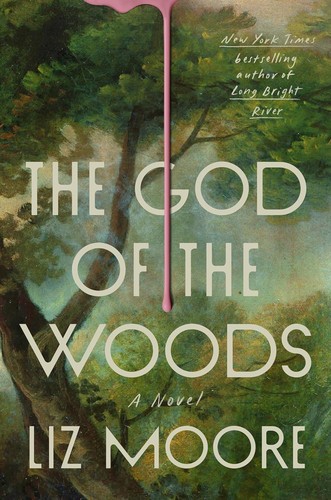
12. The God of the Woods — Lauren Fox | 400 pages
Best for: Short meetings (paced fast)
Discussion runway: 75–90 min
One sentence: a teenage girl disappears from a Adirondacks summer camp in 1975 — the same camp where her brother vanished 14 years earlier.
Club-fit note: 400 pages but reads fast. The mystery structure keeps completion rates high and the dual-timeline gives clubs a clean “did you figure it out before chapter X” entry. Works for clubs that don’t always finish literary fiction.
13. Long Island — Colm Tóibín | 320 pages
Best for: Short meetings, literary fiction
Discussion runway: 60–75 min
One sentence: Eilis Lacey from Brooklyn (2015) is back — middle-aged, marriage unraveling, contemplating a return to Ireland.
Club-fit note: Works as a standalone but rewards Brooklyn readers. Quiet and precise — clubs that want emotional resonance over plot tension like this one. Discussion often pivots to “what did she owe herself versus her family.”
14. Beautyland — Marie-Helene Bertino | 288 pages
Best for: Short meetings, unusual picks
Discussion runway: 60–75 min
One sentence: an alien is sent to observe Earth in the form of a Philadelphia girl growing up in the ’80s and ’90s; she sends reports home via fax machine.
Club-fit note: Odd and tender. Clubs that like experimental fiction embraced it; clubs expecting conventional narrative were baffled. Best for groups that want something unlike their usual picks.
15. North Woods — Daniel Mason | 352 pages
Best for: Short meetings, literary fiction, unusual picks
Discussion runway: 75–90 min
One sentence: a single plot of Massachusetts land carries multiple stories across 400 years — a Puritan deserter, a botanist, a murderer, a 19th-century couple, a modern day apple farmer — linked by the trees and the house.
Club-fit note: Form-forward: Mason treats the land as the protagonist. Clubs that love structure loved it; clubs expecting character continuity needed about 50 pages of adjustment. Discussion often fixates on which chapter was the best and why — a useful disagree-without-fighting structure.
Best comfort + feel-good picks (5 picks)
“Comfort” doesn’t mean nothing happens. These five are warm, finish-able, and leave people feeling better than when they started.
16. Tomorrow, and Tomorrow, and Tomorrow — Gabrielle Zevin | 480 pages
Best for: Comfort, broad appeal
Discussion runway: 90–105 min
One sentence: two childhood friends build a video game studio together from the ’90s through the 2020s, and the friendship is the novel.
Club-fit note: Near-universal club hit. People who don’t play games still love it; people who do recognize details that make it feel like theirs. Discussion tends to focus on the central question of the relationship: “Were they in love or not?” Clubs rarely agree.
17. Intermezzo — Sally Rooney | 464 pages
Best for: Comfort (if you’re a Rooney reader), literary
Discussion runway: 75–90 min
One sentence: two brothers — one 30-something lawyer, one 22-year-old chess prodigy — grieve their father and fall in love at the worst times with people who may be wrong for them.
Club-fit note: Long for Rooney, but the dual-brother structure gives clubs a “which brother did you prefer” question that reliably sparks 30 minutes of debate. Best for clubs already familiar with her voice.
18. Fourth Wing — Rebecca Yarros | 517 pages
Best for: Accessible / fun, genre readers
Discussion runway: 60–75 min
One sentence: a young woman starts a war college for dragon riders and falls for the most dangerous student there — fantasy romance, action, and a cliff-hanger ending.
Club-fit note: High completion rate — the plot moves fast enough that no one stops. Discussion won’t be about themes but it will be lively: who survived, what the magic system means, and what happens in the sequel. Essential if your club has romance or fantasy readers who’ve felt left out by the list. See also our Fourth Wing discussion guide.
19. Holly — Stephen King | 449 pages
Best for: Accessible, genre readers
Discussion runway: 60–75 min
One sentence: Holly Gibney investigates a series of disappearances that lead back to a couple of retired academics with a disturbing appetite — and a COVID subplot that dates it precisely.
Club-fit note: King fans adore it; the rest of the club usually finishes it because the plot won’t let them put it down. Useful for genre-mixed clubs where not everyone wants literary fiction every month.
20. The Frozen River — Ariel Lawhon | 397 pages
Best for: Comfort, historical fiction
Discussion runway: 75–90 min
One sentence: Martha Ballard, an 18th-century Maine midwife whose diary is a historical record, investigates a rape when the court refuses to.
Club-fit note: Based on a real diary. Discussion tends to split between the historical-accuracy angle and the contemporary-relevance angle — which makes it one of the more generative comfort reads on this list. Not grim; Ballard is a force.
Best for controversial / contested debates (5 picks)
These are the books where someone leaves with their mind changed, or where the argument starts in the parking lot. Know your club before you pick these.
21. All Fours — Miranda July | 352 pages
Best for: Controversial, literary fiction
Discussion runway: 90–120 min
One sentence: a 45-year-old married woman leaves on a cross-country road trip, stops in a New Jersey motel, and spends a month reinventing her relationship with her own body, desire, and perimenopause.
Club-fit note: This will not land the same with every club. Some read it as radical body liberation; others found the protagonist exhausting. The perimenopause content is specific and important — clubs with members in that range often had the most energized discussions.
Content warning: explicit sexuality, marriage conflict.
22. Wellness — Nathan Hill | 622 pages
Best for: Controversial, big-club ambitious picks
Discussion runway: 105–120 min
One sentence: a couple meets at art school in 1990s Chicago and the novel follows 30 years of their marriage alongside a sprawling argument about what “wellness” has done to modern identity.
Club-fit note: Long, and some clubs stalled around page 400. For clubs that finished it, the argument was always the same: “Is this a critique of wellness culture, or is it just describing it without a point of view?” Useful disagreement.
23. The Covenant of Water — Abraham Verghese | 736 pages
Best for: Long-haul clubs, ambitious picks
Discussion runway: 105–120 min
One sentence: three generations of a South Indian family, 1900–1977, each carrying the story of a mysterious drowning condition — medicine, faith, colonialism, and love.
Club-fit note: At 736 pages, this sorts the clubs that will tackle anything from the ones that won’t. The discussion of faith vs. medicine is genuinely interesting across religious and secular readers.
24. Soldier — David Finkel | 288 pages
Best for: Big discussion, non-fiction
Discussion runway: 90–105 min
One sentence: Finkel follows Sergeant Adam Schumann, a decorated Iraq War veteran, after he returns home — PTSD, the VA system, his family, and what “the war” looks like from a living room.
Club-fit note: Non-fiction with the pacing of a novel. The moral and political questions are unavoidable but Finkel doesn’t editorialize, which means the club does the work. One of the most even-handed books about the cost of American military service we’ve read.
25. Beautyland (second mention — for controversy in literary clubs) | see above
Or swap in: The God of the Woods for clubs that want something that generated genuine “I hated the ending” pushback.
Need a discussion guide?
Every pick above benefits from a few focused questions. For Fourth Wing, we have a full discussion guide with 20 questions. More guides are in progress — browse the collection or start a club where the book picks itself.
Reading with a club that picks books together
The hardest part of book clubs isn’t reading. It’s the group text that goes silent when someone asks “so what should we read next?”
Cuento matches you with readers who share your taste — so the list above starts to get shorter without anyone feeling overruled.
Last updated: May 2026. We add and remove picks as clubs report back. If you read one of these with your group, tell us how it went — we read every note.
More writing
Guides for your next meeting
All guides
Written by the Cuento team.
More writing