A Gentleman in Moscow Discussion Questions & Book Club Guide
by Amor Towles
Want to read A Gentleman in Moscow with a few people nearby?
About A Gentleman in Moscow
In 1922, a Bolshevik tribunal sentences Count Alexander Rostov to house arrest for life in the Metropol, a grand hotel across from the Kremlin. His crime is being an aristocrat and the author of a poem the new regime dislikes. If he ever sets foot outside, he will be shot. Moved from his elegant suite to a cramped attic room, the Count decides that if he cannot master his circumstances, he will master himself. Over the next three decades, while Russia goes through upheaval after upheaval outside the doors, the Count builds a life inside the hotel: a friendship with a curious young girl named Nina who has a key to every room, a place among the restaurant staff, a long affair with a film actress, and eventually the care of a child who changes everything. Amor Towles writes with wit, warmth, and a love of small courtesies. Circles tend to love the Count and then argue about whether the novel’s charm softens the brutality of the history happening just offstage.
Discussion questions for A Gentleman in Moscow
The Count’s sentence is meant to shrink his life. How does he respond, and at what point did you realize he was building something larger inside the hotel than he had outside it?
Nina, a nine-year-old with a hotel passkey, shows the Count the Metropol’s hidden rooms. What does their friendship give him, and what does her later life reveal about the world outside?
Early on, the Count comes close to ending his life on the hotel roof. What stops him, and how does that moment change the way he lives afterward?
The Count’s closest friends become Emile, the chef, and Andrey, the maître d’. What does this “triumvirate” suggest about work, friendship, and dignity in a society that has abolished his class?
Anna Urbanova, the actress, begins as a vain annoyance and becomes the Count’s long-term companion. How do both of them change over the course of their relationship?
The Bishop, a waiter who rises through the Party, is the Count’s quiet antagonist. What does he represent, and why does Towles make him so petty rather than menacing?
Osip Glebnikov, a Party official, pays the Count to teach him about the West, including through American films. What do their conversations reveal about how each man sees history?
Mishka, the Count’s university friend, becomes a poet who is gradually crushed by the state. How does his story show what the Count was spared, and what he was not?
When Nina leaves Sofia in the Count’s care, the novel changes. How does fatherhood transform the Count’s sense of purpose and his idea of what a gentleman is?
Towles uses footnotes, digressions, and wry asides from a narrator who seems to know history’s outcome. How did the narrative voice shape your experience of the book?
Much of the Soviet Union’s violence (famine, purges, labour camps) happens offstage. Did the novel’s focus on the hotel feel like a strength or an evasion?
The ending involves a carefully planned escape and a return to a place from the Count’s past. Did the ending satisfy you? What do you think the Count finally chose?
Themes in A Gentleman in Moscow
Freedom within confinement
The Count is a prisoner, and the novel never lets us forget it. Yet within the hotel’s walls he finds purpose, love, and meaning. Towles asks whether freedom is a matter of where you are or how you live, and the Count’s answer is shaped by his conviction that a person can be the master of his own circumstances, or else be mastered by them.
Manners as moral practice
The Count’s courtesy can look like mere old-world polish. The novel argues it is more than that: a daily practice of attention and respect toward other people, which survives even when everything else is taken. His manners become a form of quiet resistance to a regime that values none of them.
History happening elsewhere
Three decades of Soviet history pass outside the Metropol’s doors, glimpsed through visitors, news, and absences. Towles’s choice to keep the violence at a distance is deliberate. It mirrors the Count’s own position and invites readers to consider what it means to live through history from a sheltered vantage point.
Found family
The Count arrives alone, stripped of his estate and his class. By the end he has built a family from hotel staff, a former child, an actress, and a daughter who is not his by blood. The novel treats that family as the real measure of his life.
Suggested book club format
- Length: About 460 pages, roughly ten to eleven hours of reading.
- Session count: Two sessions work well. Break when Nina returns and leaves Sofia with the Count. The book shifts from a story about one man’s adjustment to a story about raising a child.
- Icebreaker: “If you had to spend the rest of your life in one building, which would you choose, and why?”
- Moderator note: The novel is leisurely, and some members may find the early chapters slow. Encourage them to note a favourite moment or line to share. A little background on the Soviet 1920s through 1950s helps, but it is not required.
How a real club read this
Share how your circle discussed A Gentleman in Moscow: tell us about your reading circle.
More books like A Gentleman in Moscow
- North Woods by Daniel Mason: a single place followed across centuries, where the setting becomes the story. North Woods discussion guide.
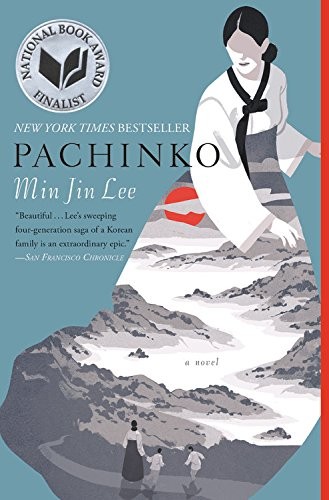
- Pachinko by Min Jin Lee: a family carried through decades of history, with politics shaping lives from just outside the frame. Pachinko discussion guide.
- The Heart’s Invisible Furies by John Boyne: one man’s life across decades, told with humour and tenderness. The Heart’s Invisible Furies discussion guide.
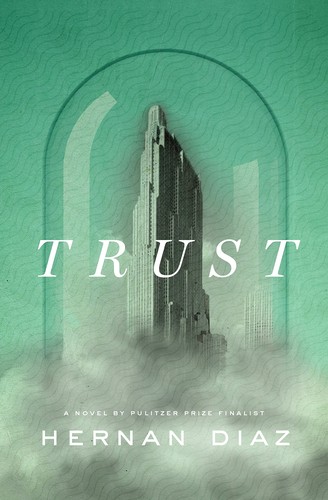
- Trust by Hernan Diaz: wealth, history, and a narrator’s control of the story, set against the upheavals of the twentieth century. Trust discussion guide.
Read A Gentleman in Moscow with neighbours in a Cuento circle. Learn how to run a great reading-circle discussion. Explore more historical fiction picks for book clubs.
About Cuento
Cuento matches you with a handful of neighbours whose reading taste overlaps with yours into a local reading circle close to home: monthly meetups, no app fatigue. Free to join. $15 only when we find your circle. If you want to read A Gentleman in Moscow with people who live nearby, that is exactly what we do.
Bring A Gentleman in Moscow to a Cuento reading circle near you →
Imagine reading A Gentleman in Moscow with a handful of neighbours who love it too. Cuento matches you with local readers who share your taste. Free to join, and just $15 on the day your circle forms.
Match with neighboursMore guides like this


From the blog
Discussion guide by the Cuento team. Questions are original.
More book guides