James Discussion Questions & Book Club Guide
by Percival Everett
Want to read James with a few people nearby?
About James
Percival Everett retells Adventures of Huckleberry Finn from the raft’s other end. Jim, enslaved in Hannibal, Missouri, learns that Miss Watson plans to sell him away from his wife, Sadie, and his daughter, Lizzie. He hides on Jackson Island, where Huck turns up after faking his own death, and the two drift down the Mississippi together. The twist Everett builds everything on is quiet and devastating: Jim is fiercely literate. He taught himself to read in Judge Thatcher’s library, and the halting dialect white people hear from him is a performance, one he drills into the children of his community as a survival skill. Along the way he is separated from Huck, sold to a blackface minstrel troupe, and forced to risk everything for a pencil stub. The novel won the 2025 Pulitzer Prize for Fiction and the 2024 National Book Award. Circles that read it rarely stay on the plot for long. They end up talking about language, and about who gets to tell a story that has already been told.
Discussion questions for James
Early in the novel, Jim gives the children a lesson in how to speak to white people: which grammar to “get wrong,” and when. How did that scene change the way you read every conversation that follows?
Jim’s first-person narration is sharp, ironic, and fluent, while his spoken lines to white characters are not. When did the gap between the two voices feel funny to you, and when did it stop being funny?
A young man named George steals a pencil so Jim can write, and he pays for it with his life. What does the book suggest about the cost of Jim’s literacy, and who bears that cost?
In fever dreams and delirium, Jim argues with Voltaire and Locke. What do those conversations reveal about the gap between Enlightenment ideas of freedom and the men who wrote them?
Huck in this novel is recognizably Twain’s boy, but seen from outside. Did your feelings about Huck change compared with the original, and what does Jim see in him that Huck cannot see in himself?
The Duke and the King are comic villains in Twain. Everett keeps them, but the danger they pose to Jim feels much sharper. How does shifting the point of view change what is funny and what is frightening?
Jim is sold to a minstrel troupe and made to perform in blackface, a Black man pretending to be a white man pretending to be Black. What is Everett saying about performance, audience, and who profits from both?
Norman, a man who can pass as white, teams up with Jim to con slave traders. How does his story complicate the book’s questions about identity, safety, and what passing costs?
Late in the novel, Jim tells Huck something about their relationship that reframes the whole journey. How did you react, and did it deepen the book for you or feel like a turn too far?
The final section moves from survival into violence as Jim goes back for Sadie and Lizzie. Did the shift in tone feel earned? How did you feel about where Everett takes Jim by the end?
Jim chooses a name for himself and writes it down. Why does naming matter so much to this book, and what does the title ask of readers who know the character only as Jim?
If you have read Huckleberry Finn, did James change how you think of it? If you haven’t, do you now want to, and what would you be reading it for?
Themes in James
Language as disguise and weapon
The dialect Jim uses around white people is a mask, and the novel lets us see the face behind it. Everett turns speech into a system of survival: a way to seem harmless, to overhear, to stay alive. But the book also treats writing as dangerous power. Once Jim holds a pencil, he can record his own account, and that act is treated as a threat by everyone who depends on his silence.
Who owns the story
Twain’s novel is a classic, taught for generations, and Jim is one of its most discussed characters. Everett does not argue with the original so much as step inside it and look out through Jim’s eyes. The result raises a question for every reader: whose inner life did the canon leave out, and what changes when that person narrates?
Freedom as more than escape
Running away is only the first step. Jim wants his family, his name, and the right to think out loud. The novel keeps asking what freedom actually means when the law, the market, and even well-meaning friends still define you. Its answer grows harder and more radical as the book goes on.
Family, chosen and given
Jim’s whole journey bends toward Sadie and Lizzie, yet the most tender scenes are often with Huck. Everett explores the ties that slavery tried to erase and the new ones that form anyway, and he does not pretend those ties are simple.
Suggested book club format
- Length: About 320 pages, roughly six to seven hours of reading.
- Session count: One session works well. If your circle wants two, break after Jim is separated from Huck and taken in by the minstrel troupe. The book changes register sharply after that point.
- Icebreaker: “Is there a version of yourself you perform for certain people? What would they be surprised to hear you say?”
- Moderator note: The novel contains racial slurs, a lynching, and the sexual exploitation of enslaved women, all rendered in period context. Name that at the start so people can speak openly. Some members will know Huckleberry Finn well and others not at all. Both groups have something to offer, so avoid letting the conversation become a comparison quiz.
How a real club read this
Share how your circle discussed James: tell us about your reading circle.
More books like James
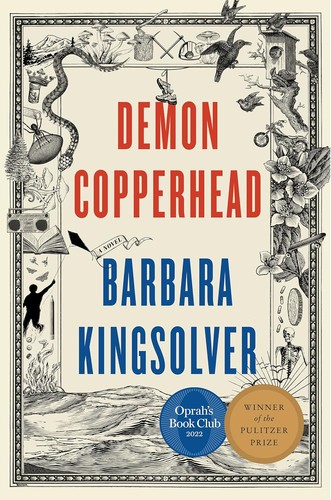
- Demon Copperhead by Barbara Kingsolver: another American classic (David Copperfield) retold from the margins, with a narrator whose voice carries the whole book. Demon Copperhead discussion guide.
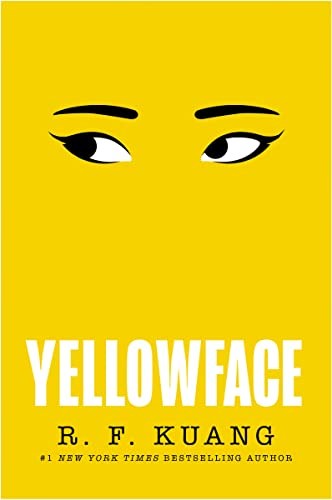
- Yellowface by R. F. Kuang: a sharp, uncomfortable novel about who gets to tell which stories, and who profits when they do. Yellowface discussion guide.
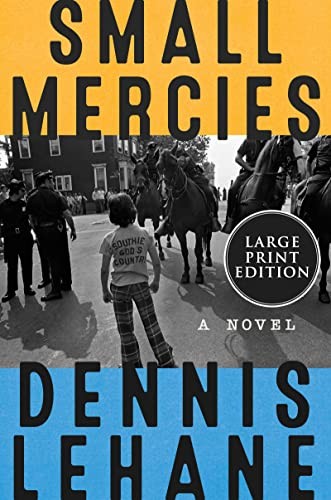
- Small Mercies by Dennis Lehane: race, violence, and a parent searching for a missing child, set in 1970s Boston. Small Mercies discussion guide.
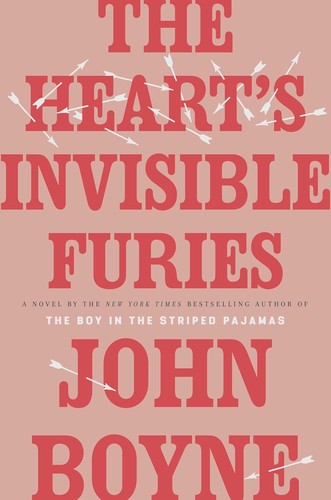
- The Heart’s Invisible Furies by John Boyne: a man forced to hide who he is, told across a lifetime with humour and grief side by side. The Heart’s Invisible Furies discussion guide.
Read James with neighbours in a Cuento circle. Learn how to run a great reading-circle discussion. Explore more literary fiction picks for book clubs.
About Cuento
Cuento matches you with a handful of neighbours whose reading taste overlaps with yours into a local reading circle close to home: monthly meetups, no app fatigue. Free to join. $15 only when we find your circle. If you want to read James with people who live nearby, that is exactly what we do.
Imagine reading James with a handful of neighbours who love it too. Cuento matches you with local readers who share your taste. Free to join, and just $15 on the day your circle forms.
Match with neighboursMore guides like this
From the blog
Discussion guide by the Cuento team. Questions are original.
More book guides