Orbital Discussion Questions & Book Club Guide
by Samantha Harvey
Want to read Orbital with a few people nearby?
About Orbital
Six people live aboard the International Space Station: Chie from Japan, Nell from Britain, Shaun from the United States, Pietro from Italy, and Anton and Roman from Russia. The station circles the Earth sixteen times a day, and Samantha Harvey’s short novel follows the crew through one of those days, one orbit per chapter. Very little happens in the usual sense. They run experiments, exercise, eat, clean, sleep, and look out of the window. Below them a super typhoon builds toward the Philippines, and a new crewed mission heads for the Moon. Chie has just learned that her mother has died, and she cannot go home. What the book offers instead of plot is attention: to the Earth seen whole, to sunrise after sunrise, to what a human life looks like from four hundred kilometres up. Orbital won the 2024 Booker Prize. It is barely 140 pages, which makes it an easy yes for busy circles and a surprisingly deep well for conversation.
Discussion questions for Orbital
The novel has almost no conventional plot. How did you respond to that? Did you find yourself waiting for something to happen, or did the book change what you were waiting for?
Each chapter follows one orbit. How did that structure affect your sense of time while reading, and did it echo anything about the crew’s own experience?
Chie learns of her mother’s death while in orbit and cannot return for the funeral. How does her grief sit alongside the vastness she sees out of the window?
The crew watches the typhoon form and move toward land, knowing people below will suffer and that they can do nothing. What did those passages make you feel about distance, responsibility, and helplessness?
From orbit, the crew cannot see borders, yet they come from countries in tension with one another. How does Harvey use the station to think about nationality and common humanity?
Harvey’s descriptions of Earth are dense and lyrical. Was there a passage that stayed with you? What did it make you see differently?
The Moon mission launching during the novel draws the crew’s thoughts outward, yet the book keeps looking back at Earth. Why do you think Harvey keeps the camera pointed home?
Each crew member has a private life on the ground: marriages, children, illnesses, regrets. Whose inner life did you connect with most?
The novel touches on environmental change, visible even from orbit. Does Orbital read to you as a climate novel? If so, what kind?
The astronauts’ bodies are changing: muscles weakening, sleep disrupted, the sense of up and down unsettled. How does the physical strangeness of their lives feed the book’s bigger questions?
Orbital won the Booker Prize despite, or perhaps because of, its brevity and lack of plot. What do you think the judges saw in it? Do you agree?
If you could see the whole Earth for one day, what do you think you would feel? What might you want to change when you came back down?
Themes in Orbital
The overview effect
Astronauts often describe a shift in perspective when they see the whole Earth from space: borders vanish, and the planet looks fragile and whole. Harvey builds her novel around that experience, asking what it would mean for the rest of us to take it seriously.
Time made visible
Sixteen sunrises in a day, sixteen sunsets. On the station, time is both measured to the second and strangely unmoored. The novel’s orbital structure lets readers feel how artificial and how precious our ordinary measures of time really are.
Grief at a distance
Chie’s mother dies while Chie is too far away to say goodbye. The typhoon strikes people the crew can see but cannot help. Distance in this book is not only physical. It is the condition of caring about something you cannot reach, which Harvey presents as close to the human condition itself.
Wonder and its responsibilities
The book is full of awe at the beauty of Earth. It is also aware that humans are damaging the planet it describes. Harvey holds wonder and worry together without resolving them, and leaves readers to decide what that combination asks of them.
Suggested book club format
- Length: About 140 pages, roughly three hours of reading.
- Session count: One session. The book is short enough that many members will read it twice, and that second read is often where the conversation deepens.
- Icebreaker: “What is the most beautiful view you have ever seen, and where were you?”
- Moderator note: Some members will love the lyrical, plotless style; others may find it hard going. Ask everyone to bring one passage they marked. Reading a few aloud is a good way to open the conversation, since the book’s power is in its sentences.
How a real club read this
Share how your circle discussed Orbital: tell us about your reading circle.
More books like Orbital
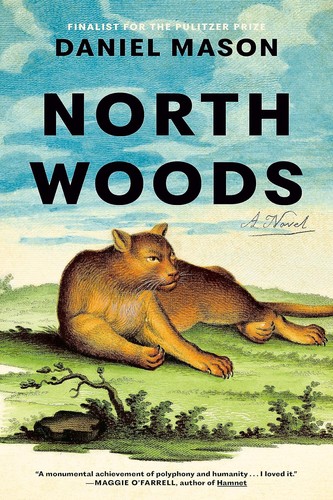
- North Woods by Daniel Mason: a single place observed across centuries, where the natural world outlasts every human story. North Woods discussion guide.
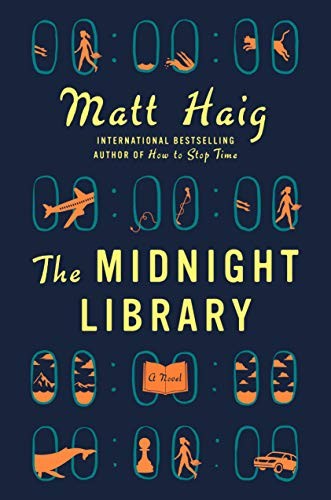
- The Midnight Library by Matt Haig: a strange vantage point used to ask what makes an ordinary life meaningful. The Midnight Library discussion guide.
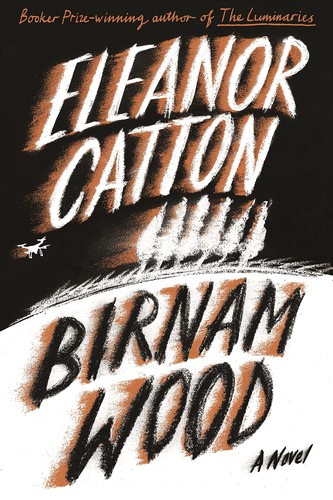
- Birnam Wood by Eleanor Catton: a novel about the land, the people who want to use it, and what our choices cost the Earth. Birnam Wood discussion guide.
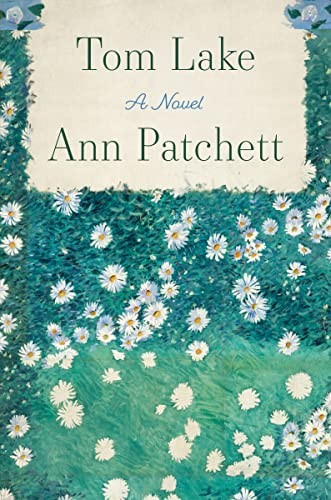
- Tom Lake by Ann Patchett: a quieter book about memory, time, and the private lives beneath ordinary days. Tom Lake discussion guide.
Read Orbital with neighbours in a Cuento circle. Learn how to run a great reading-circle discussion. Explore more literary fiction picks for book clubs.
About Cuento
Cuento matches you with a handful of neighbours whose reading taste overlaps with yours into a local reading circle close to home: monthly meetups, no app fatigue. Free to join. $15 only when we find your circle. If you want to read Orbital with people who live nearby, that is exactly what we do.
Imagine reading Orbital with a handful of neighbours who love it too. Cuento matches you with local readers who share your taste. Free to join, and just $15 on the day your circle forms.
Match with neighboursMore guides like this
From the blog
Discussion guide by the Cuento team. Questions are original.
More book guides